
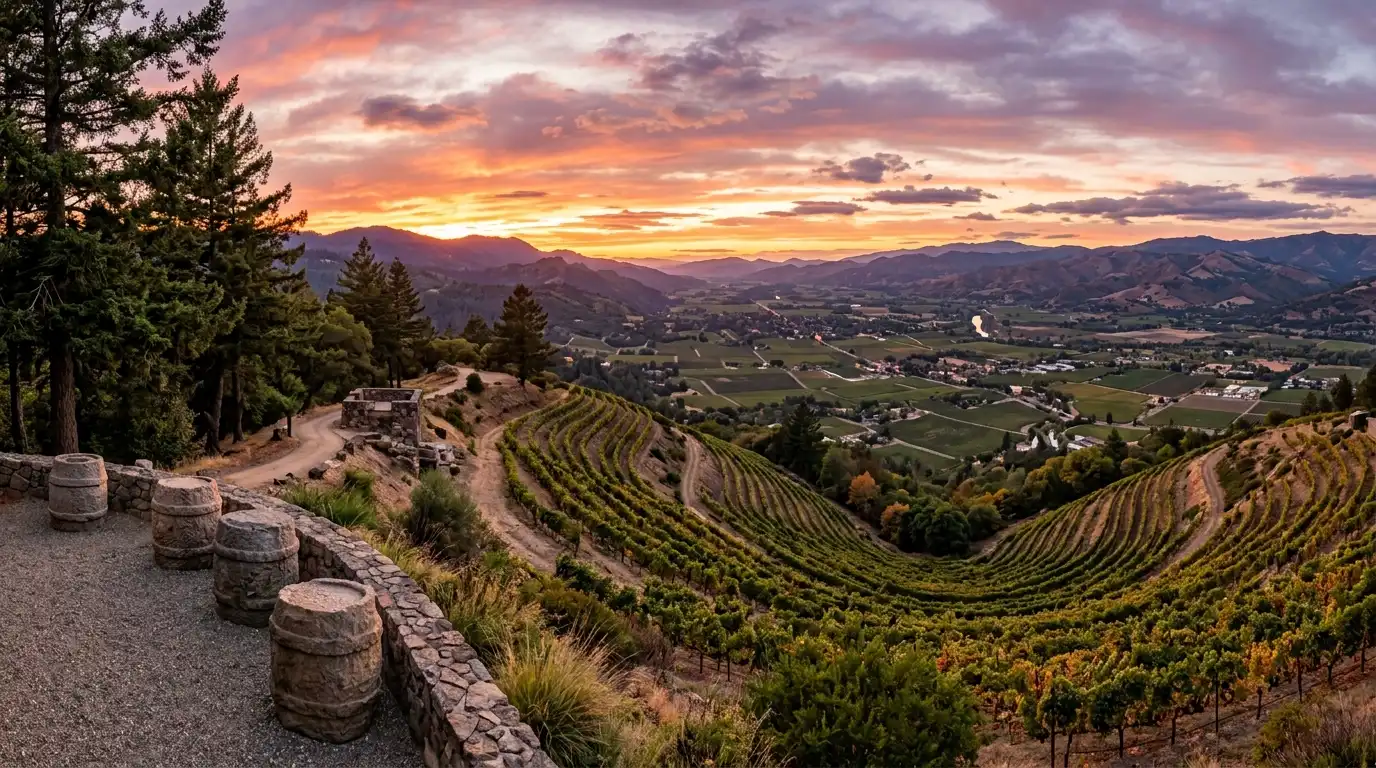
While millions of visitors flock to Napa Valley each year to cruise down Highway 29 and the Silverado Trail, a completely different world exists just a few thousand feet above the valley floor. Tucked away along winding roads, shaded by redwood groves and steep pine-forested ridges, lie the high-elevation sub-appellations of Spring Mountain District and Mt. Veeder.
For wine enthusiasts seeking an intimate, off-the-beaten-path experience, exploring these mountain appellations offers a quiet sanctuary away from the crowded tasting rooms below. Here, boutique, family-owned estates craft some of the most complex, age-worthy, and distinctive Cabernet Sauvignons in California. If you are ready to elevate your wine country itinerary, this guide breaks down everything you need to know about visiting the hidden gem wineries of Spring Mountain and Mt. Veeder.
Why High-Elevation Mountain Wines Are Worth the Climb
To understand what makes the mountain districts of Napa Valley so extraordinary, you have to look at the unique microclimates and topography. While the valley floor experiences hot days and heavy morning fog, mountain vineyards sit above the fog line, receiving cooler daytime temperatures and warmer nighttime conditions.
The rugged, volcanic, and sedimentary soils force the vines to struggle for water and nutrients. This natural stress yields smaller grape berries with thick skins, resulting in wines characterized by:
- Deep Color and Intense Tannins: High skin-to-juice ratios create bold, structured reds that can age gracefully for decades.
- Vibrant Acidity: Cooler daytime temperatures preserve natural acidity, balancing the rich fruit flavors with exceptional fresh vitality.
- Distinctive Terroir: Earthy nuances, dried herbs, forest floor notes, and crushed stone minerality shine through every glass.
Hidden Gems of the Spring Mountain District
Located on the eastern slopes of the Mayacamas Mountains just above the town of St. Helena, the Spring Mountain District AVA is defined by its steep terrain, lush forests, and rich heritage of hillside farming. Here are two standout hidden gems that showcase the true soul of the mountain.
1. Keenan Winery
Established in 1977, Keenan Winery is a pioneer in Spring Mountain viticulture. Situated at an elevation of 1,700 feet, this family-owned winery operates entirely on solar power and focuses on sustainable, low-yield farming practices.
The tasting experience at Keenan is relaxed, educational, and deeply personal. Instead of a bustling, crowded bar, visitors are treated to seated tastings surrounded by serene mountain woodlands. Their Reserve Cabernet Sauvignon and estate-grown Merlot consistently showcase the signature elegance, rich plum notes, and smooth tannins that Spring Mountain is celebrated for.
2. Schweiger Vineyards
Sitting high near the crest of Spring Mountain, Schweiger Vineyards is a true estate operation owned and operated by the Schweiger family for over four decades. Father Fred Schweiger oversees the vineyards, while his son Andrew serves as the master winemaker.
Visiting Schweiger feels like dropping in on old friends who happen to make world-class wine. Guests can enjoy sweeping views of the Mayacamas range while sipping small-lot Cabernet Sauvignon, Cabernet Franc, and Chardonnay. Because every bottle is produced exclusively from estate-grown fruit, the wine offers an authentic signature of this specific slope.
Hidden Gems of Mt. Veeder
Moving south along the Mayacamas range, Mt. Veeder represents some of the most extreme hillside farming in North America. With vineyard slopes angling up to 30 degrees or more, almost all work must be performed meticulously by hand. The result is a selection of low-yield, highly concentrated wines that wine collectors cherish.
3. Mount Veeder Winery
Founded in the late 1960s, Mount Veeder Winery was among the first to prove that high-altitude Cabernet Sauvignon could thrive on these steep, forested slopes. The vineyards are carved directly into the mountain landscape, interspersed with native oak and bay tree groves.
Tastings here offer a deep dive into rustic, mountain-grown viticulture. Their signature Cabernet Sauvignon is famous for its dark fruit profile, notes of wild bramble and cocoa, and a firm tannic backbone built to withstand years in the cellar. It is a classic representation of traditional Mt. Veeder terroir.
4. Fontanella Family Winery
If you are searching for an authentic, small-batch craft winery experience, Fontanella Family Winery is an essential stop. Nestled along the winding curves of Partrick Road on Mt. Veeder, Jeff and Karen Fontanella established this boutique winery to focus on handcrafted, high-elevation wines.
With production kept intentionally small, visits to Fontanella are by appointment only, ensuring a quiet, unhurried atmosphere. Guests can tour the production facilities, taste directly from barrels on select tours, and sample rich, fruit-forward Cabernet Sauvignons and Zinfandels while overlooking the peaceful hillsides.
Pro Tips for Planning Your Mountain Winery Tour
Exploring the mountain AVAs of Napa Valley requires a slightly different approach than cruising the valley floor. Keep these insider tips in mind when building your itinerary:
1. Book Appointments Well in Advance:
Unlike large valley-floor tasting rooms, almost all high-elevation mountain wineries operate strictly by advance reservation due to local county permits and limited capacity. Plan to book your tastings 3 to 6 weeks early.
2. Pacing and Drive Times:
Navigating narrow, winding mountain roads takes considerably more time than driving down Highway 29. Limit your schedule to two wineries per day—one in the morning and one in the afternoon—so you can safely enjoy the scenic drive without feeling rushed.
3. Dress in Layers and Wear Sturdy Shoes:
Mountain weather can vary significantly compared to the valley. Morning temperatures at higher elevations can be brisk, and terrain around estate vineyards can be uneven. Comfortable walking shoes and light jackets or layers are highly recommended.
4. Designate a Driver or Hire Transportation:
The tight switchbacks of Spring Mountain Road and Mt. Veeder Road demand total focus. Hiring a local driver or designating a sober driver allows everyone in your group to fully enjoy the wine tasting experience without safety concerns.
Final Thoughts: Elevate Your Napa Valley Experience
The true magic of Napa Valley isn’t found only in its famous grand châteaux, but in the quiet, elevation-driven estates perched high above the fog. Stepping off the main strip and ascending into Spring Mountain and Mt. Veeder opens the door to unforgettable panoramic vistas, deeply personal interactions with winemakers, and wines of extraordinary structure and character.
On your next trip to wine country, skip the crowded tasting bars, take the winding roads up the mountain, and discover the authentic, hidden gems that make Napa Valley truly world-class.