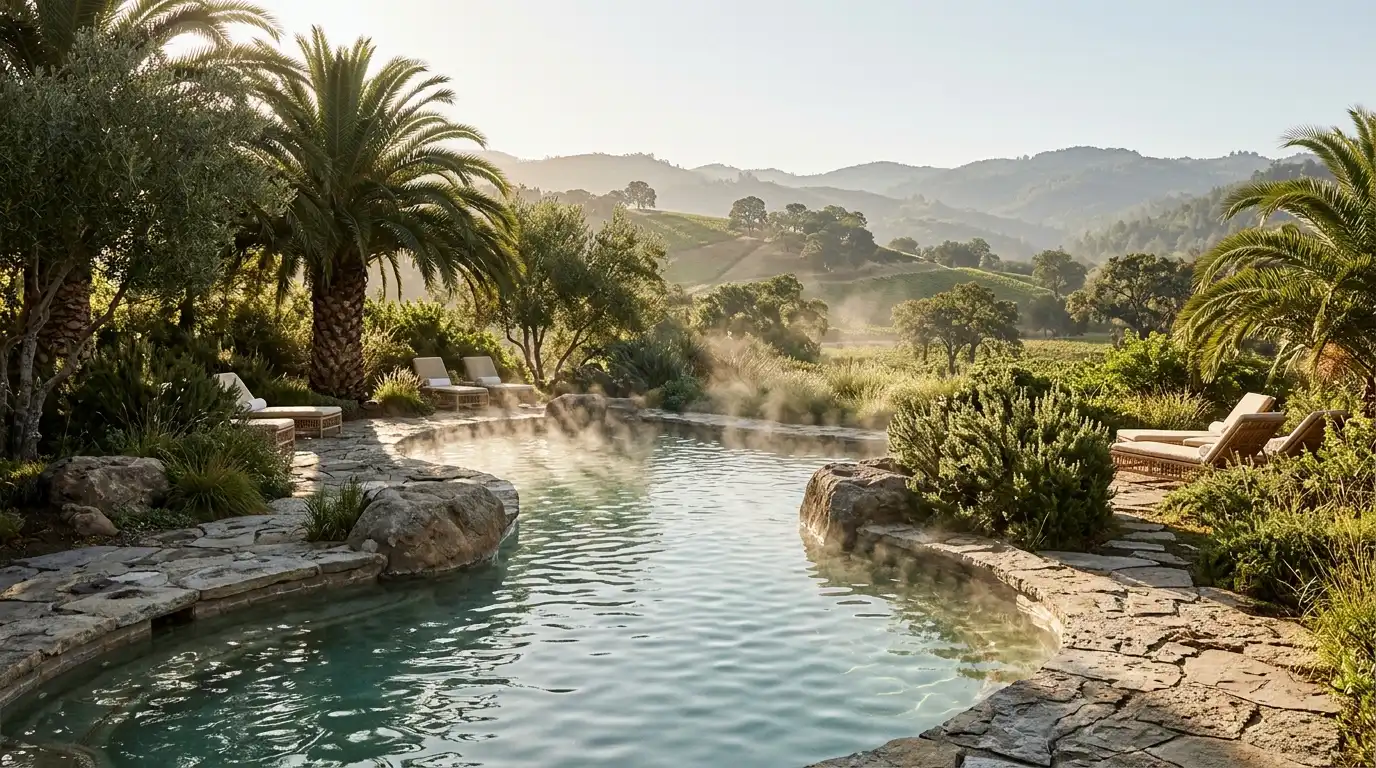
While Napa County is world-renowned for its sun-drenched vineyards and premier wineries, a older geologic story lies just beneath the surface of the valley floor. Long before the first grapevines were planted, natural geothermal activity shaped the landscape of northern Napa Valley. Exploring Napa historic mineral springs reveals a deep-rooted wellness culture anchored in thermal waters, volcanic ash baths, and centuries of relaxation traditions.
The Volcanic Origins of Calistoga’s Geothermal Waters
The story of Napa’s mineral springs begins millions of years ago with intense volcanic activity in the Mayacamas Mountain Range. Mount Saint Helena, an extinct volcano standing tall at the northern end of the valley, played a major role in creating the underground geothermal reservoirs that heat water far beneath the earth’s crust.
Rainwater collects in subterranean aquifers where it reaches extreme depths, heating to temperatures exceeding 200 degrees Fahrenheit while absorbing rich concentrations of minerals including sulfur, calcium, magnesium, and trace elements. Under natural pressure, this nutrient-dense water rises to the surface as hot springs and geysers, creating the unique natural wellness haven that defines northern Napa County today.
Indigenous Wappo tribes were the first human inhabitants to recognize the therapeutic value of these waters. For generations, they gathered at the natural hot springs near present-day Calistoga to soak, heal injuries, and hold communal ceremonies, naming the area Tu-la-ha-lu-si, meaning “beautiful hot land.”
Samuel Brannan and the Birth of California’s First Resort Town
In the 1850s, California pioneer and entrepreneur Samuel Brannan visited the upper Napa Valley and envisioned creating a premier western spa resort modeled after the famous Saratoga Springs in New York. Combining “California” and “Saratoga,” Brannan famously dubbed the area Calistoga, laying the groundwork for California’s original hot springs destination.
Brannan opened the historic Calistoga Hot Springs resort in 1862, attracting wealthy travelers from San Francisco who arrived by ferry and train to take the waters. Visitors indulged in warm sulfur baths, steam treatments, and carriage rides around the scenic volcanic landscape. To explore the broader historic landmarks across the region, visitors can check the Napa County Historical Society archives, which chronicle the transformation of Calistoga from a rugged frontier territory into a world-famous health retreat.
The Healing Power of Volcanic Mud and Mineral Soaks
What sets Napa County’s thermal baths apart from standard mineral resorts is the unique combination of geothermal water and local volcanic ash. Over decades of refined practice, Calistoga developed its world-famous mud bath treatment—a traditional wellness therapy that continues to draw visitors from across the globe.
The Science Behind the Mud Bath
A classic Calistoga mud bath consists of a warm mixture of pure volcanic ash mined from local deposits blended with hot mineral water and natural peat moss. The dense mixture holds heat evenly, allowing the body to relax deeply while natural heat increases circulation, soothes aching joints, and opens pores to detoxify the skin.
Mineral Water Therapy and Hydrotherapy
Beyond mud treatments, simple mineral soaks offer significant physical benefits. The naturally occurring minerals in Napa’s springs work together to relieve muscular tension, improve skin health, and promote mental relaxation. Guests typically move through a structured hydrotherapy cycle: a warm mineral soak, a steam room or sauna session, a cooling shower, and a quiet period of rest to restore equilibrium.
Exploring the Old Faithful Geyser of California
Located just north of downtown Calistoga sits one of California’s most interesting natural phenomena: the Old Faithful Geyser of California. As one of only three geysers in the world designated as “faithful,” it erupts at regular intervals, shooting boiling mineral water high into the air.
Fueled by the same geothermal energy that powers Calistoga’s bathhouses, the geyser provides a tangible look at the powerful subterranean forces working beneath Napa County. The surrounding grounds feature educational exhibits on earthquake prediction research, local geology, and native flora, making it an ideal stop for outdoor enthusiasts and families alike.
Modern Mineral Resorts and Historic Bathhouses
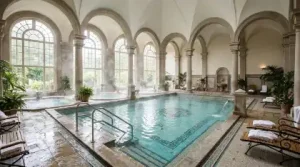
Today, Napa County offers a diverse spectrum of mineral spring experiences ranging from rustic, historic bathhouses to modern eco-friendly wellness retreats. Whether you seek a traditional mid-century soaking experience or a refined luxury spa day, Calistoga’s thermal establishments honor their origin story while offering updated amenities.
- Historic Soaking Establishments: Long-standing resort properties maintain traditional bathhouses where guests can experience authentic wooden tub soaks and original mud bath rituals.
- Outdoor Thermal Pools: Many local hotels feed their swimming and soaking pools directly from on-site geothermal wells, cooling the water to comfortable temperatures ranging between 80 and 104 degrees Fahrenheit.
- Day Spa Experiences: Visitors short on time can book single treatments or afternoon soaking passes to experience the thermal waters without an overnight stay.
Tips for Planning Your Mineral Spring Visit
To fully enjoy your day soaking in Napa County’s thermal waters, keep these practical guidelines in mind:
- Hydrate Continuously: Thermal mineral waters and high temperatures increase sweating. Drink plenty of fresh water before, during, and after your soak to remain fully hydrated.
- Allow Time to Rest: Schedule quiet relaxation time following a mineral bath or mud treatment to allow your body temperature to return to normal gradually.
- Combine Outdoors and Wellness: Pair a morning soak with an outdoor hike at nearby Robert Louis Stevenson State Park for panoramic views of Napa Valley before unwinding in the springs.
Embracing Napa’s Timeless Wellness Tradition
Napa County’s identity extends far beyond its celebrated vineyards and gourmet dining rooms. The geothermal waters flowing beneath Calistoga represent an enduring physical connection to the land’s ancient heritage. Stepping into a historic mineral bath offers more than relaxation—it invites you to participate in a centuries-old California tradition that continues to refresh mind and body.